What you'll need:
A number connected to the WhatsApp Business integration in Kommo.
A paid Kommo account (Base, Advanced, Pro, or Enterprise plan) or be within 14 days of an active trial to be able to use the WhatsApp Business integration.
Keep in mind:
To send regular (free-form) messages, the 24-hour customer service window must be open (i.e., the customer has messaged in the last 24hrs).
To send messages outside the 24-hour customer service window, businesses must use approved WhatsApp template messages.
Authentication template messages are not supported in Kommo.
Currency in an existing WhatsApp Business account can’t be changed. To use a different currency, create a new WhatsApp Business Account and select the currency during setup.
2026 updates
Starting January 1, 2026, Meta implemented pricing for specific countries, regional mappings, and introduced a new webhook for volume tier tracking. What’s changed:
Rate increases: Marketing messages in India
Rate decreases:
Marketing messages in France and Egypt
Utility and authentication messages in North America
In 2026, Meta is adding messaging rates in 10 new currencies and will support 16 currencies on the WhatsApp Business Platform by year-end. To use a new currency, create a new WhatsApp Business Account and select the currency during setup.
Important: View all rate cards.
Other important updates include:
The MXN (Mexican pesos) currency: Available from January 1, 2026 for businesses with credit lines; open to all businesses from April 1, 2026.
India local billing: Available from January 1, 2026. Eligible businesses will receive invoices from Facebook India beginning February 2026, payable to a local bank account.
2025 updates
Starting October 1, 2025, rates for some templates changed by category and country. What’s changed:
Rate increases:
Marketing messages in the United Arab Emirates
Utility and authentication messages in Colombia
Rate decreases:
Marketing messages in Mexico
Utility and authentication messages in Saudi Arabia, Argentina, and Egypt
Regional mapping update: Zimbabwe (+263) moves from Other to Rest of Africa, applying lower regional rates.
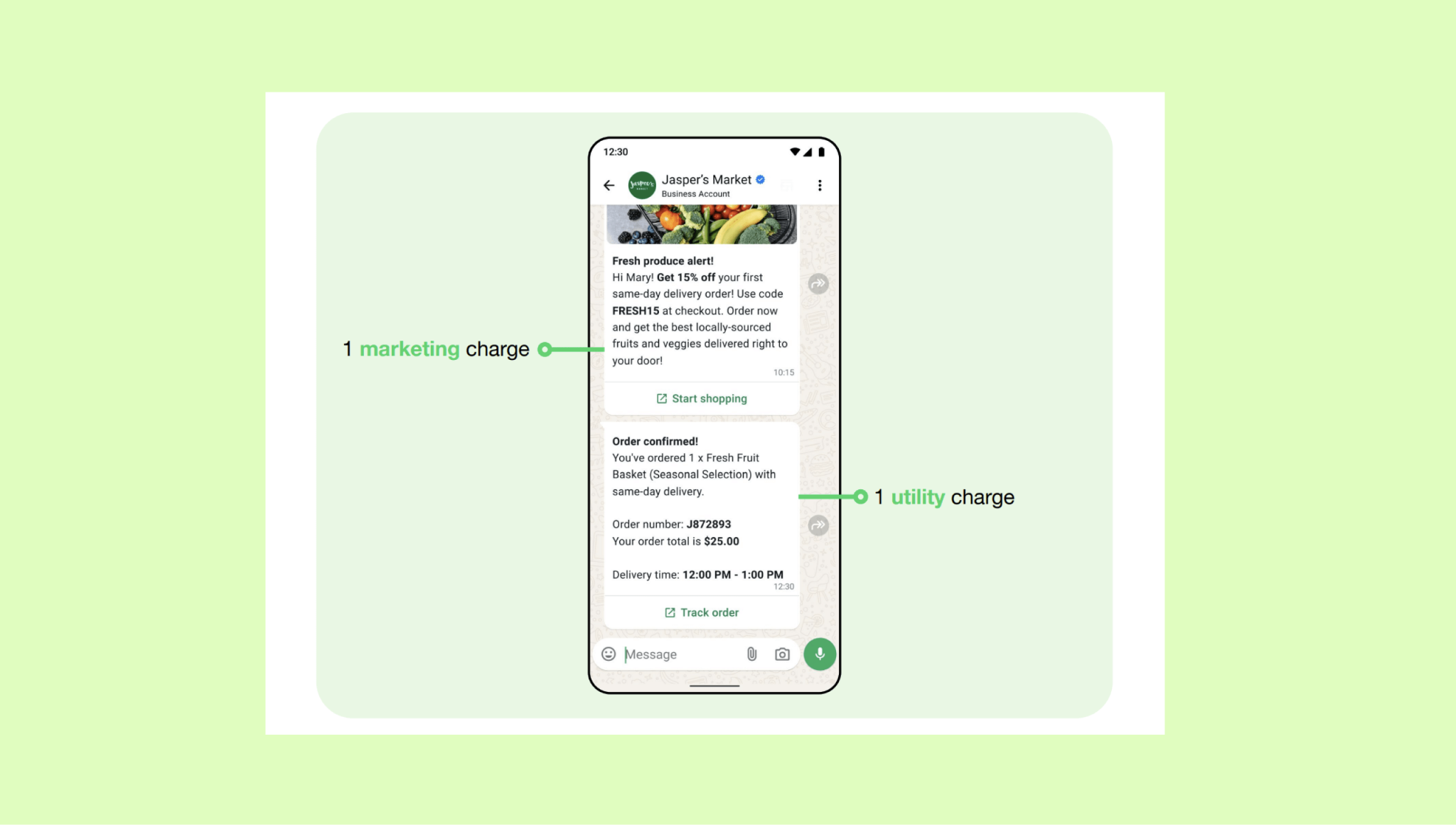
Starting July 1, 2025, Meta implemented a new pricing model that makes it easier to understand how WhatsApp Business messages are charged. Here's what changed:
Charges now apply per message, not per conversation.
Utility template messages sent as a reply during an open customer service window are free.
Each delivered template message is billed individually (no more charging by conversation type like “marketing” or “utility”).
The 24-hour customer service window still exists — but billing rules have changed.
Other changes from Meta:
New rates for utility and authentication templates in different markets (visit Meta’s pricing page for exact rates).
Volume tiers: the more utility or authentication messages you send, the better your price per message.
Utility template categories may change based on how users engage or react.
If you need to connect your number to WhatsApp Business in Kommo, check out our setup article.
Types of messages and when you’re charged
Free-form messages
Regular (free-form) messages are free to send, but only if the customer has messaged you in the last 24 hours — this is called the customer service window. Once that window closes, you can’t send regular messages anymore. You’ll need to use an approved WhatsApp template instead.
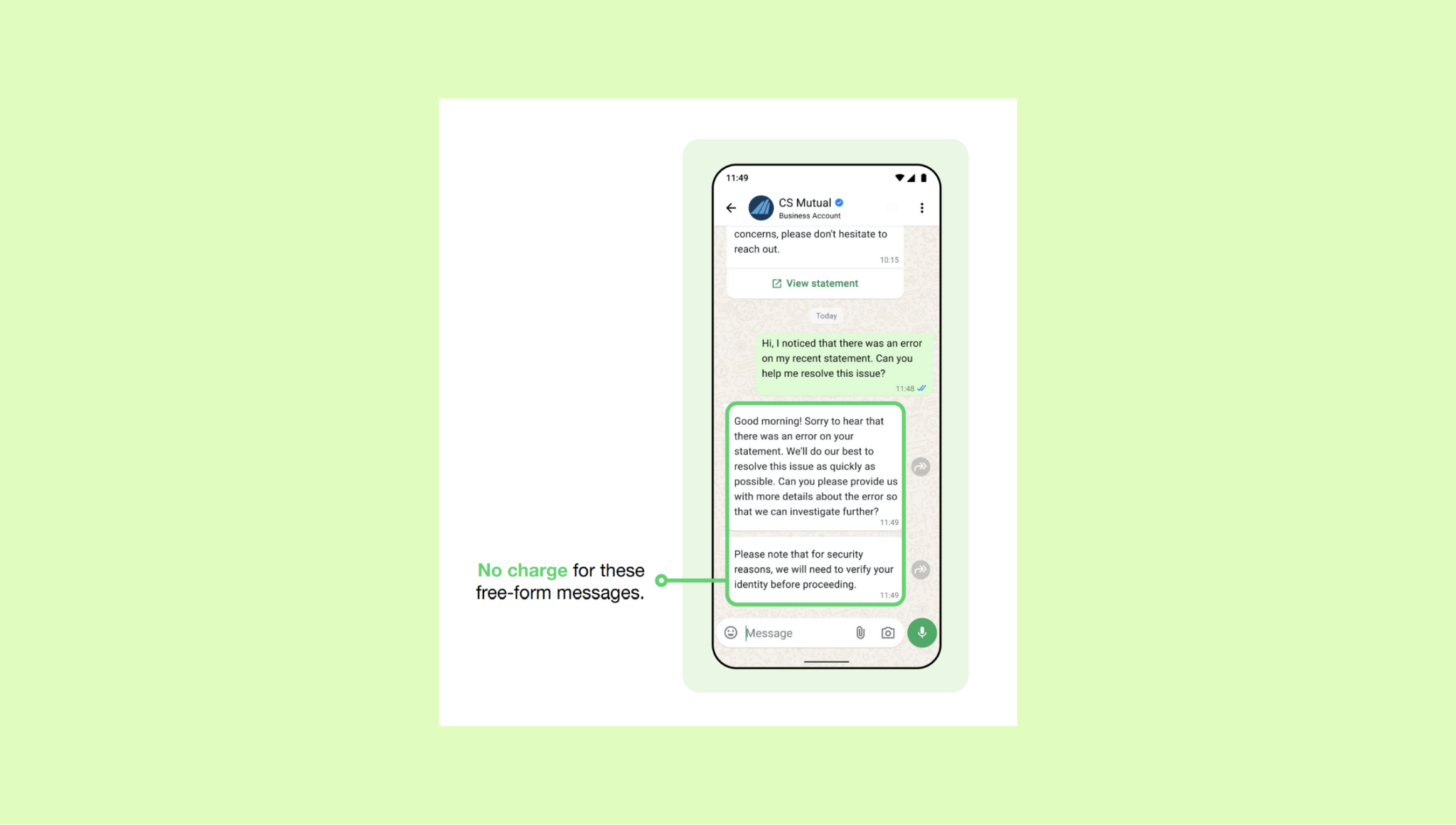
If you try to send a regular message outside the window, it won’t be delivered, and you’ll see an error:
Template messages
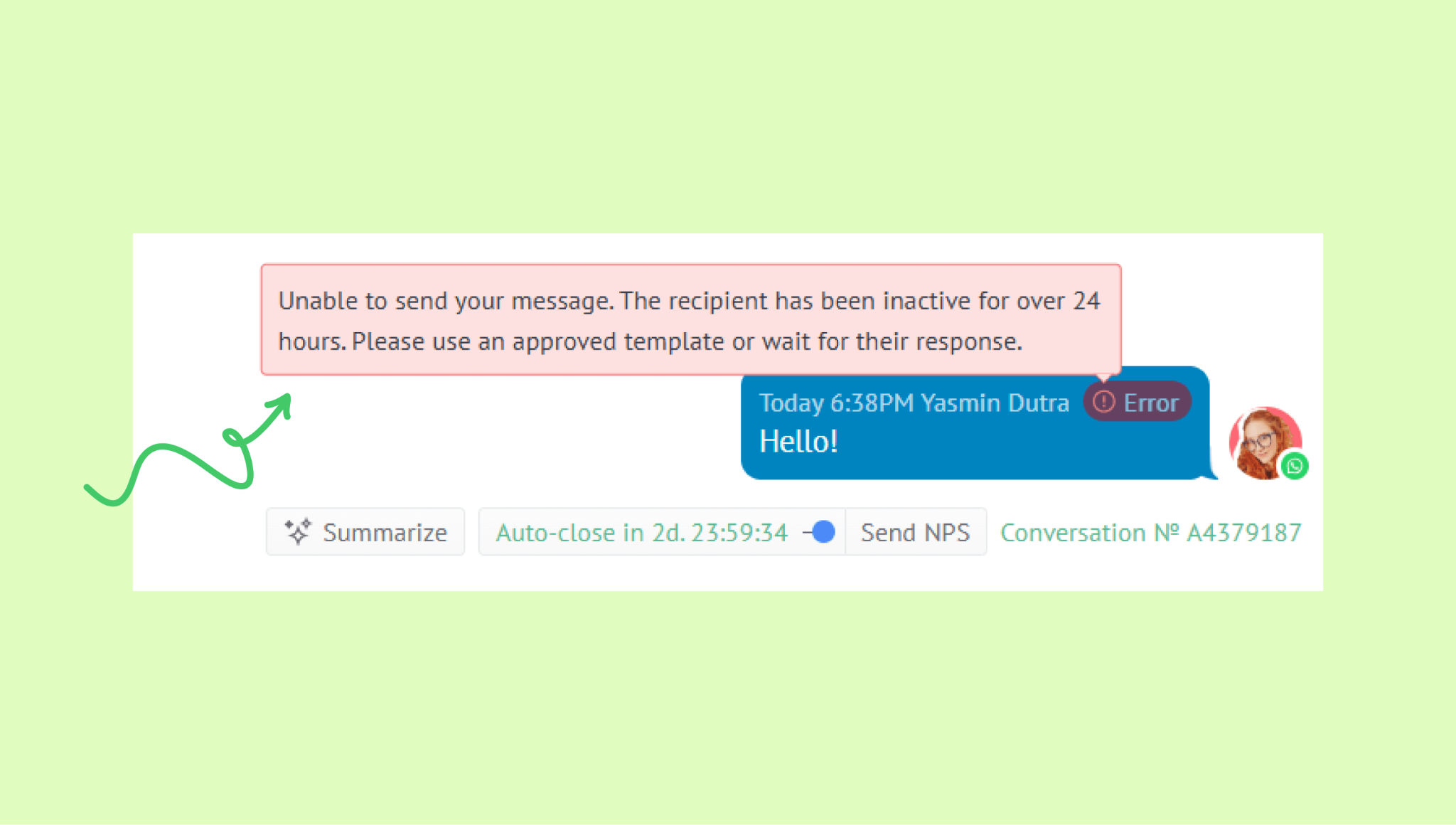
Templates are approved messages you can send to start a chat or when the customer service window is closed. You're only charged for templates that are successfully delivered.
There are three types of templates:
Utility templates — Order confirmations or payment updates. They’re free if sent during an open customer window, but billed if sent afterward.
Marketing templates — Promotions, news, or announcements. These are always billed.
Authentication templates — Login codes and identity verification. These are always billed (currently Kommo does not support authentication templates).
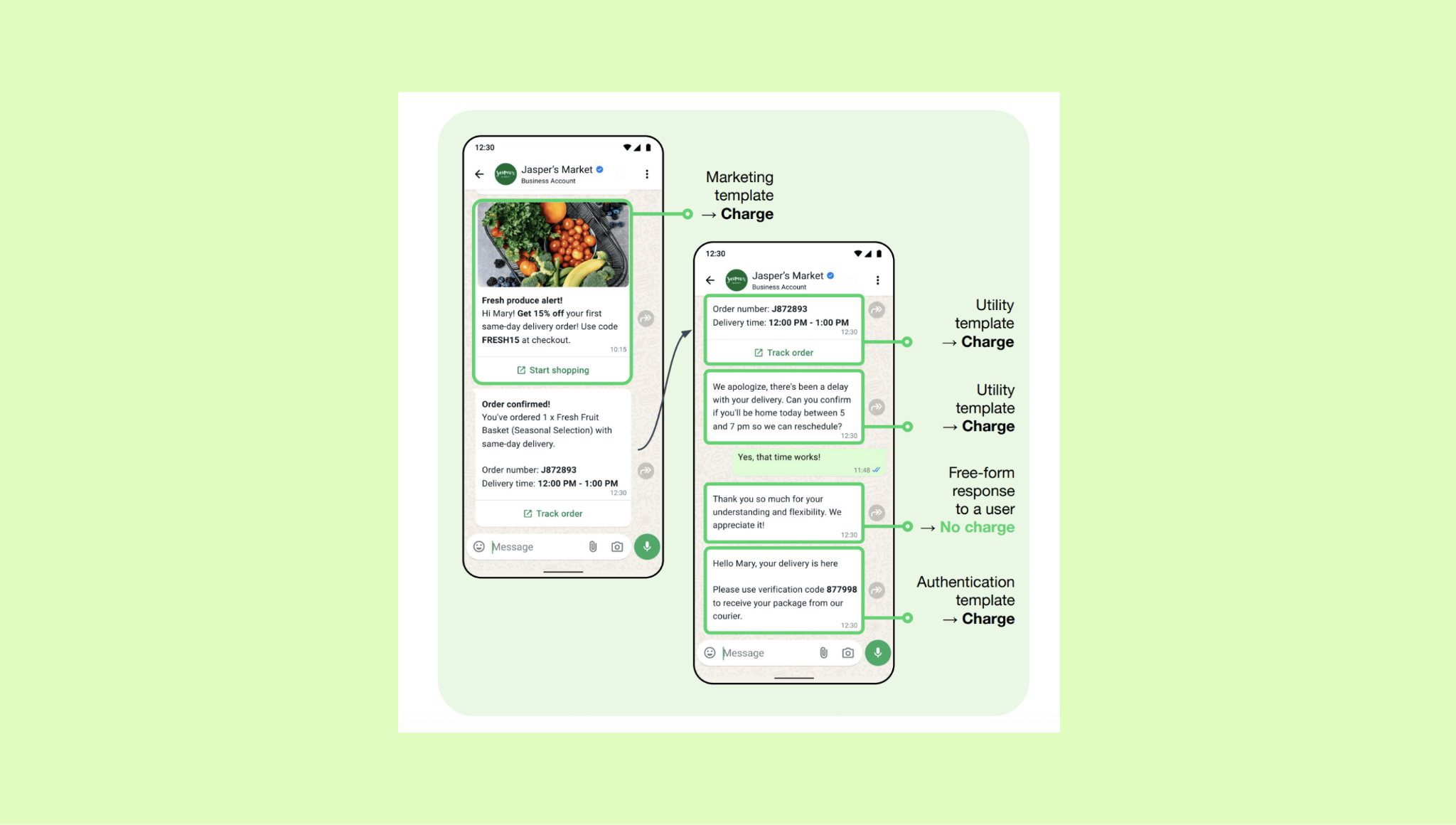
Learn how each template type is defined and used.
What’s the ‘customer service window’?
This is a 24-hour period that begins whenever a customer sends you a message. While it’s open, you can send free-form messages and utility templates at no cost.
Once the window closes, only paid template messages can be delivered. If a customer responds to your message, the 24-hour timer resets and the window is reopened.
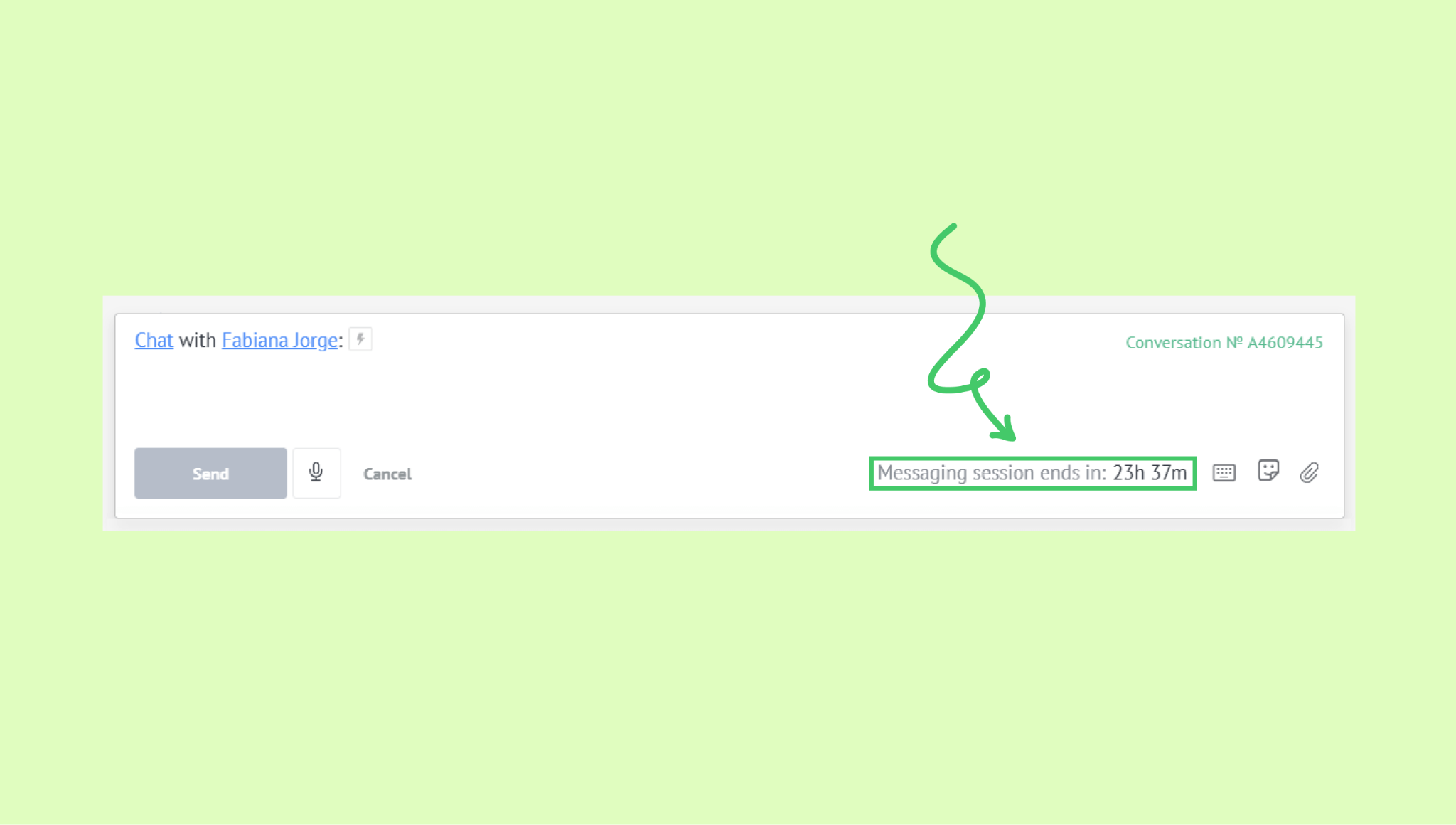
Note: You’ll see a countdown timer in your chat so you never lose track!
Special case: Free entry points
You also get a special 72-hour free messaging window if a customer contacts you through either:
A Click-to-WhatsApp ad on Facebook or Instagram, or
A WhatsApp button on your Facebook Page.
If you respond within 24 hours, you can send any type of message — including templates — for free for the next 72 hours.
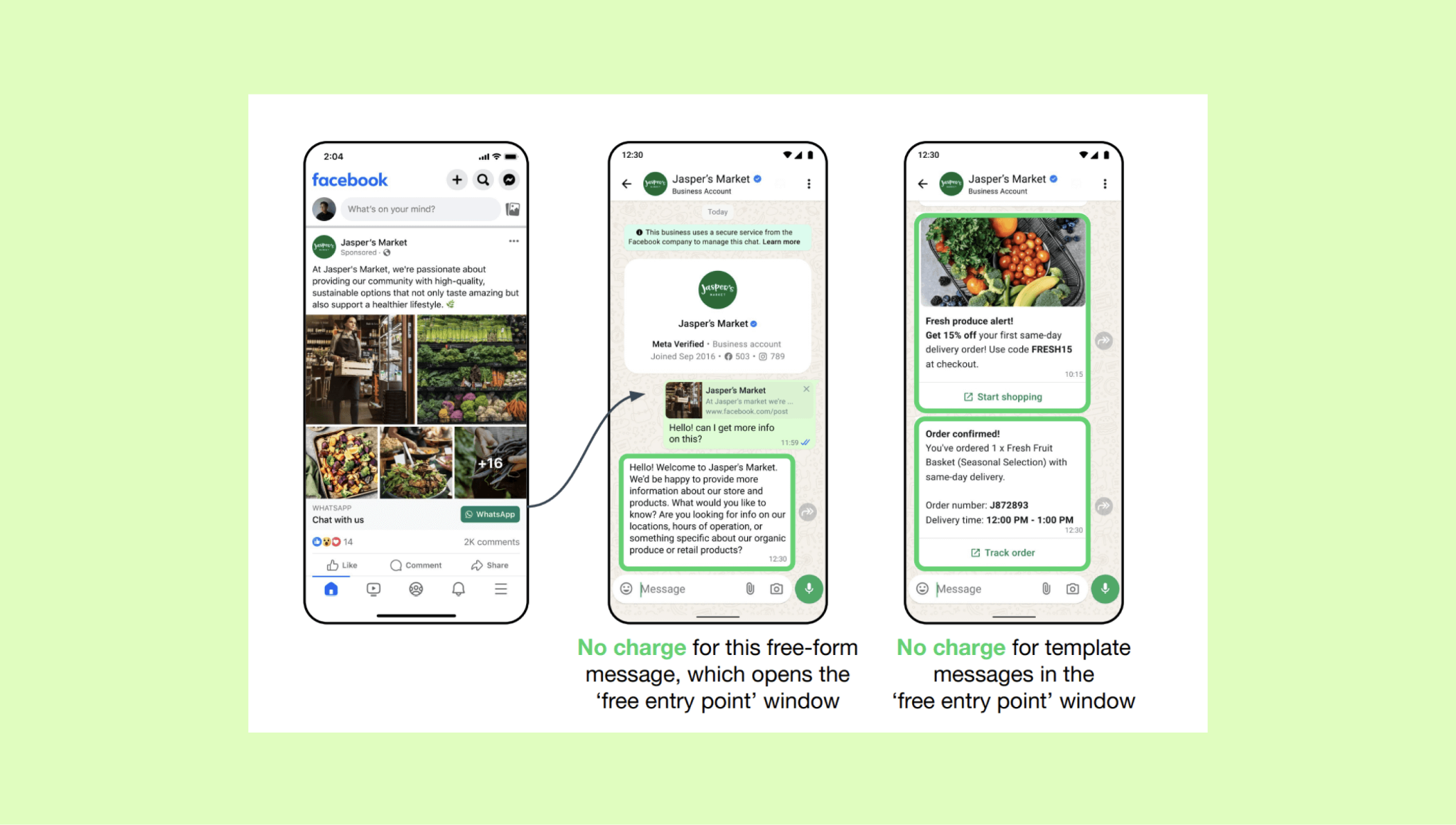
Note: All messages are free during this window, but WhatsApp’s rule still applies. You can only send free-form messages if the customer has contacted you within the last 24 hours. If not, simply use an approved template to reopen the customer service window — it’ll still be free as long as you're within the 72-hour period.
Find more details on free entry point conversations here.
Volume-based discounts
Meta now offers automatic discounts on utility and authentication templates based on how many messages you send each month — the more you send, the lower your cost per message.
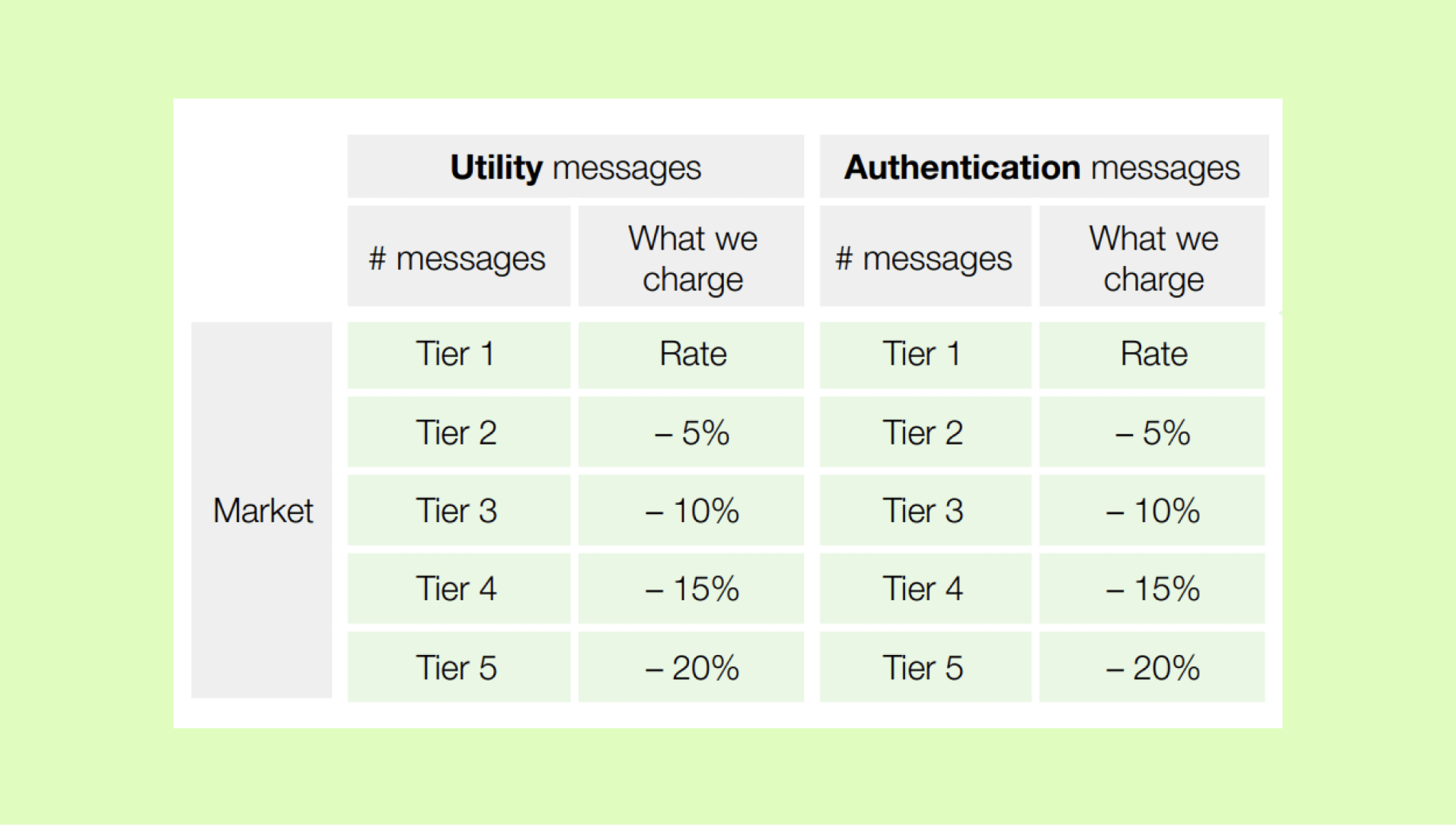
Discounts are calculated separately for each template type (utility or authentication) and country. For example, sending a high volume of utility messages to Brazil won’t reduce the price of authentication messages sent to India.
Your monthly message count resets on the start of each month, according to your WhatsApp Business Account’s timezone.
If your business has multiple WhatsApp numbers under the same Meta portfolio, their message volumes are combined by country and template type.
Utility templates sent for free during an open 24-hour customer window don’t count toward your discount total.
To understand more on how payment thresholds work see Meta's article on billing, and for details on volume-based discounts refer to their volume tiers documentation.
Limits for marketing messages
To prevent spam, WhatsApp places limits on how many marketing messages each user can receive.
Each person can only receive a certain number of marketing messages in a set time, but WhatsApp doesn’t disclose the exact number or timeframe. These limits can vary by country and may change over time.
Before: The limit only applied to starting new marketing conversations — businesses could send just one follow-up if a conversation was already open.
Now: You can send as many marketing messages as you want, but every delivered message counts toward the user’s personal limit.
If the user replies to your marketing message, a 24-hour customer service window opens. Any messages you send during this window do not count toward the marketing limit.
Note: Marketing templates are currently paused for all U.S. (+1) numbers.
How payments work
WhatsApp Business uses a payment threshold system. Here’s how it works:
Meta sets an automatic threshold for your account (for example, $20).
Once your message charges reach this amount, your account is billed.
If you don’t hit the threshold during the month, you’ll be charged the total on your monthly billing date.
You’ll receive an email receipt every time a charge is made — whether it’s when you hit the threshold or at the end of the billing cycle.
During a billing period, your account may:
Hit the threshold once
Hit it multiple times
Or not hit it at all
Note: Thresholds can change over time based on your account’s payment history. Learn more about payment threshold rules for WhatsApp Business accounts.
If you need more help with setup or troubleshooting, feel free to reach out to our support chat or contact us via WhatsApp. You can also hire a Kommo partner to do all the hard work for you.
Not a user yet? Sign up for our 14-day free trial or book a free live demo.